Two Large Chinese Container Ships Turn Back After Attempting Transit Through Strait Of Hormuz
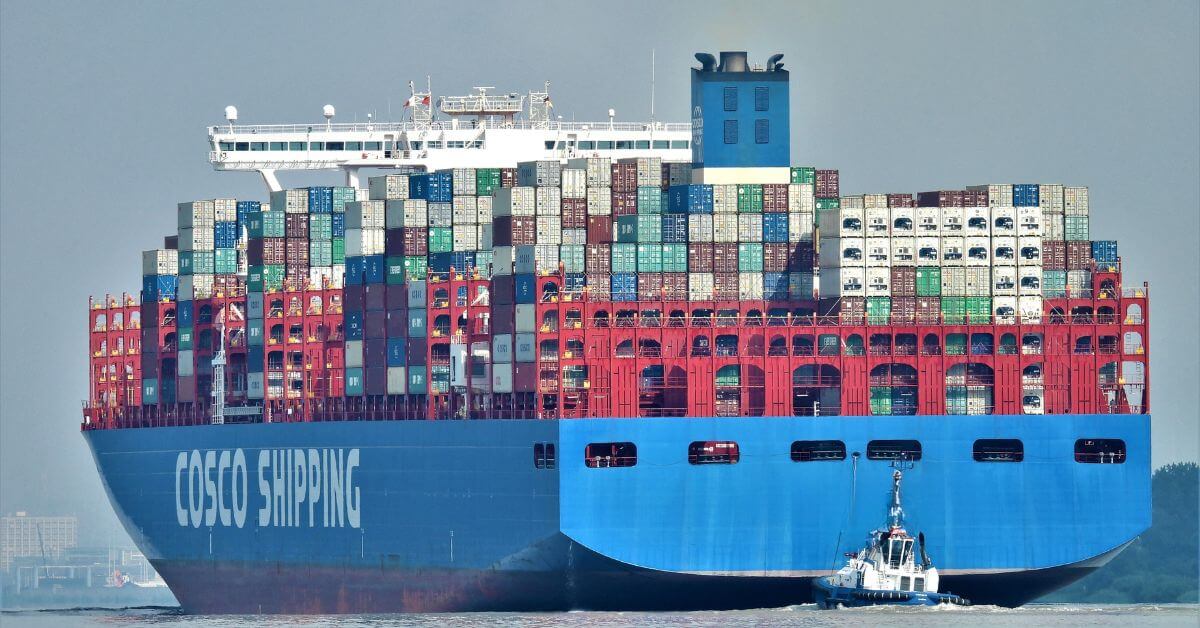
Two large container ships linked to COSCO Shipping Corp. attempted to exit the Persian Gulf through the Strait of Hormuz on Friday but turned back after reaching near the passage.
This happened even though Iran said vessels from friendly nations, including China, could pass through the strait.
The vessels, CSCL Indian Ocean and CSCL Arctic Ocean, had been stuck inside the Gulf since late February when tensions escalated due to conflict involving the United States and Israel.
According to ship-tracking data from Kpler, both ships attempted to pass at around 0350 GMT but reversed course near Iran’s Larak and Qeshm islands before completing the transit.
Both ships are Hong Kong-flagged and have a capacity of about 19,000 twenty-foot equivalent units each, making them among the larger container vessels in global trade.
Data from maritime tracking systems also showed that the ships updated their AIS signals to indicate Chinese ownership and crew, a step sometimes used by operators to signal neutrality during sensitive passages.
Iran’s foreign minister Abbas Araghchi had said in a message that Iran allows passage through Hormuz for friendly countries such as China, Russia, India, Iraq, and Pakistan.
However, Iran has also made it clear in communications to the International Maritime Organization that vessels linked to the United States, Israel, or their allies may be blocked.
The country has maintained that it will decide which ships can pass and under what conditions.
The Strait of Hormuz remains one of the most important shipping routes in the world, especially for oil and gas shipments from Gulf countries.
The ongoing conflict has already affected traffic, with many vessels avoiding entry or remaining stranded inside the Gulf.
Reports based on data from Lloyd’s List Intelligence indicate that hundreds of ships and thousands of seafarers are currently impacted by restricted movement in the region.
Energy exports from major producers such as Saudi Arabia and Qatar have also been disrupted.
Movement through the strait in recent days has been limited. A small number of vessels have managed to transit, including Indian-flagged LPG carriers and a Thai oil tanker that passed after coordination with Iranian authorities.
Most activity inside the Gulf has involved Iranian tankers leaving and cargo vessels bringing in essential goods such as grain.
Diplomatic efforts have continued alongside the maritime situation. Wang Yi said that initiating peace talks would help restore normal navigation through Hormuz during a discussion with Pakistan’s foreign minister.
At the same time, statements from the United States suggested that Iran had allowed limited tanker movements, though details remain unclear.
The failed attempt by the two COSCO vessels shows that even ships linked to countries considered friendly by Iran are facing uncertainty when attempting to transit the strait.
References: Reuters, Bloomberg
Want to read more?
Check out the full article on the original site