Saudi Arabia Restores Full 7 Million bpd Capacity On Key East-West Oil Pipeline After Attacks
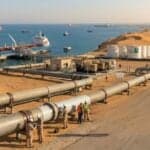


Saudi Arabia has restored full oil pumping capacity on its East-West pipeline, bringing it back to around seven million barrels per day, the country’s Ministry of Energy said on Sunday.
The pipeline had been affected by attacks during the recent conflict involving the United States, Israel and Iran, which disrupted parts of Saudi Arabia’s energy infrastructure.
After repair work, the system is now operating normally again, helping maintain oil supply to both local and international markets.
The East-West pipeline, which connects the Abqaiq oilfield in the east to the Red Sea port of Yanbu, has become especially important as shipping through the Strait of Hormuz remains heavily disrupted.
With the strait effectively blocked, Saudi Arabia has relied on this route to continue crude exports.
The ministry said the attacks had earlier reduced oil production capacity by about 600,000 barrels per day and cut pipeline throughput by around 700,000 barrels per day.
Several energy facilities were hit, including oil, gas, refining, petrochemical and electricity sites across Riyadh, the Eastern Province and Yanbu Industrial City.
Production at the offshore Manifa oilfield has now been restored to its full capacity of about 300,000 barrels per day after being affected by the strikes.
However, work is still ongoing at the Khurais oilfield, where another 300,000 barrels per day of output was lost due to damage.
Saudi Arabia did not name who carried out the attacks, though it said it had intercepted several missiles and drones from Iran in recent weeks. Iran has said it was targeting US assets in the region.
Other Gulf countries including Kuwait, Qatar, Bahrain and the United Arab Emirates were also hit during the escalation, and Qatar released footage showing damage to civilian and energy sites.
Earlier reports had said that attacks on a pumping station along the East-West pipeline reduced daily output by 700,000 barrels. Strikes on the Manifa and Khurais fields had cut another 600,000 barrels per day combined.
Despite a ceasefire between the United States and Iran earlier this week, shipping in the Strait of Hormuz has not returned to normal.
According to S&P Global, only 22 ships with active tracking systems exited the strait between Wednesday and Friday after the truce, compared to about 135 vessels a day before the conflict.
The Strait of Hormuz is a key route for global oil trade, carrying around one-fifth of the world’s supply. Its disruption has affected tanker movement and pushed energy prices higher.
With traffic still limited, Saudi Arabia’s East-West pipeline remains a crucial route for keeping oil exports moving.
References: Aljazeera, Reuters
Want to read more?
Check out the full article on the original site